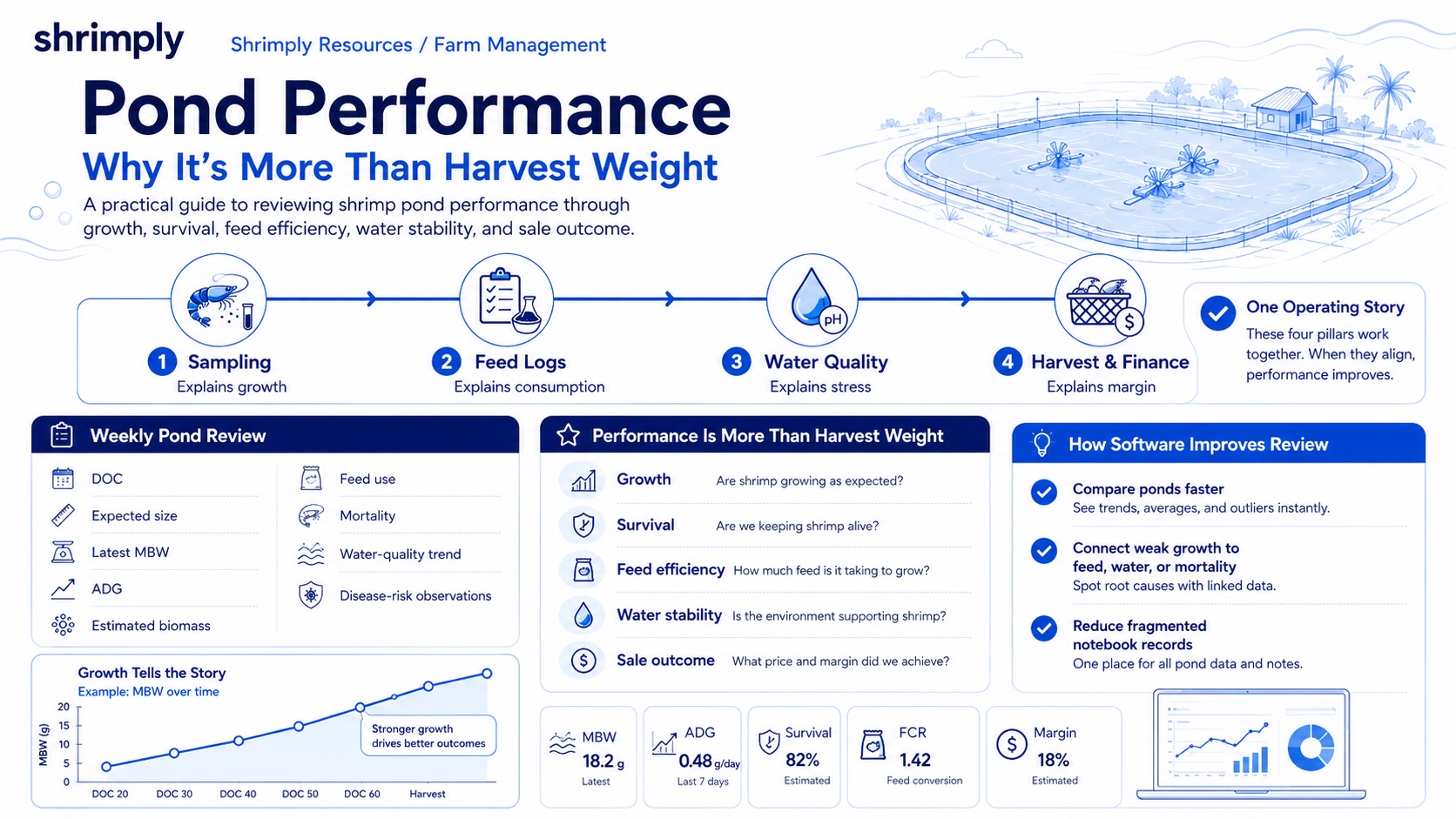
Why pond performance is more than harvest weight
A pond can produce a good harvest weight and still hide weak performance if it used too much feed, lost too many shrimp, or required emergency treatment late in the cycle. For farm managers, performance should combine growth, survival, feed efficiency, water stability, and sale outcome.
This is why Shrimply treats pond records as one operating story. Sampling explains growth. Feed logs explain consumption. Water quality records explain stress. Harvest and finance records explain whether the cycle created margin.
What farmers should compare every week
A practical weekly review should compare DOC, expected size, latest MBW, ADG, estimated biomass, feed use, mortality, water-quality trend, and any disease-risk observations. The goal is not perfect prediction. The goal is spotting ponds that are drifting away from the plan early enough to act.
Research and best-practice material repeatedly point to the same operating pattern: better feeding, water quality, disease prevention, and record keeping work together. Reviewing only one metric makes the farm easier to manage on paper but less accurate in practice.
How software improves the review
Digital records make pond comparison faster because the team can see whether weak growth is connected to appetite, water-quality instability, mortality, or inconsistent sampling. This is especially useful on farms with multiple ponds, rotating technicians, and fragmented notebooks.
What to apply on the farm
- Review MBW, ADG, feed use, mortality, and water quality together.
- Compare each pond against its stocking plan and target harvest window.
- Flag any pond where feed use rises but growth does not follow.
- Keep harvest and finance records tied to the original pond cycle.
What is pond performance?
A pond can produce a good harvest weight and still hide weak performance if it used too much feed, lost too many shrimp, or required emergency treatment late in the cycle. For farm managers, performance should combine growth, survival, feed efficiency, water stability, and sale outcome. Pond performance is a combined view of biology, operations, and cost.
Why does pond performance matter for shrimp farmers?
Pond performance is a combined view of biology, operations, and cost. Feed, water quality, mortality, and sampling records should be reviewed together. The strongest pond review compares actual results against the original cycle plan.
What should farmers review when managing pond performance?
Review MBW, ADG, feed use, mortality, and water quality together. Compare each pond against its stocking plan and target harvest window. Flag any pond where feed use rises but growth does not follow. Keep harvest and finance records tied to the original pond cycle.
Aquaculture engineers and vannamei shrimp farm practitioners dedicated to precision pond data, evidence-based water quality management, and biological yield optimization.
M.M. in Agribusiness, 15+ years commercial shrimp farm production planning, cycle cost modeling, and harvest operations
Shrimp farm management software
Explore how shrimp farm management software connects with this farm guide in Shrimply.
Vannamei Stocking Density per m²: Complete Guide & Calculator
Calculate Pacific white shrimp stocking density per m², post-larvae (PL) count, required aeration horsepower, and carrying capacity with our interactive calculator and farm guide.
Shrimp Cycle Planning: From Stocking to Harvest Without Guesswork
A practical guide to planning a vannamei shrimp crop cycle with stocking targets, feed demand, sampling checkpoints, risk reviews, and harvest timing.
Shrimp farming resources library
Browse more practical Shrimply guides for vannamei farm operations and management.