What disease alerts should include
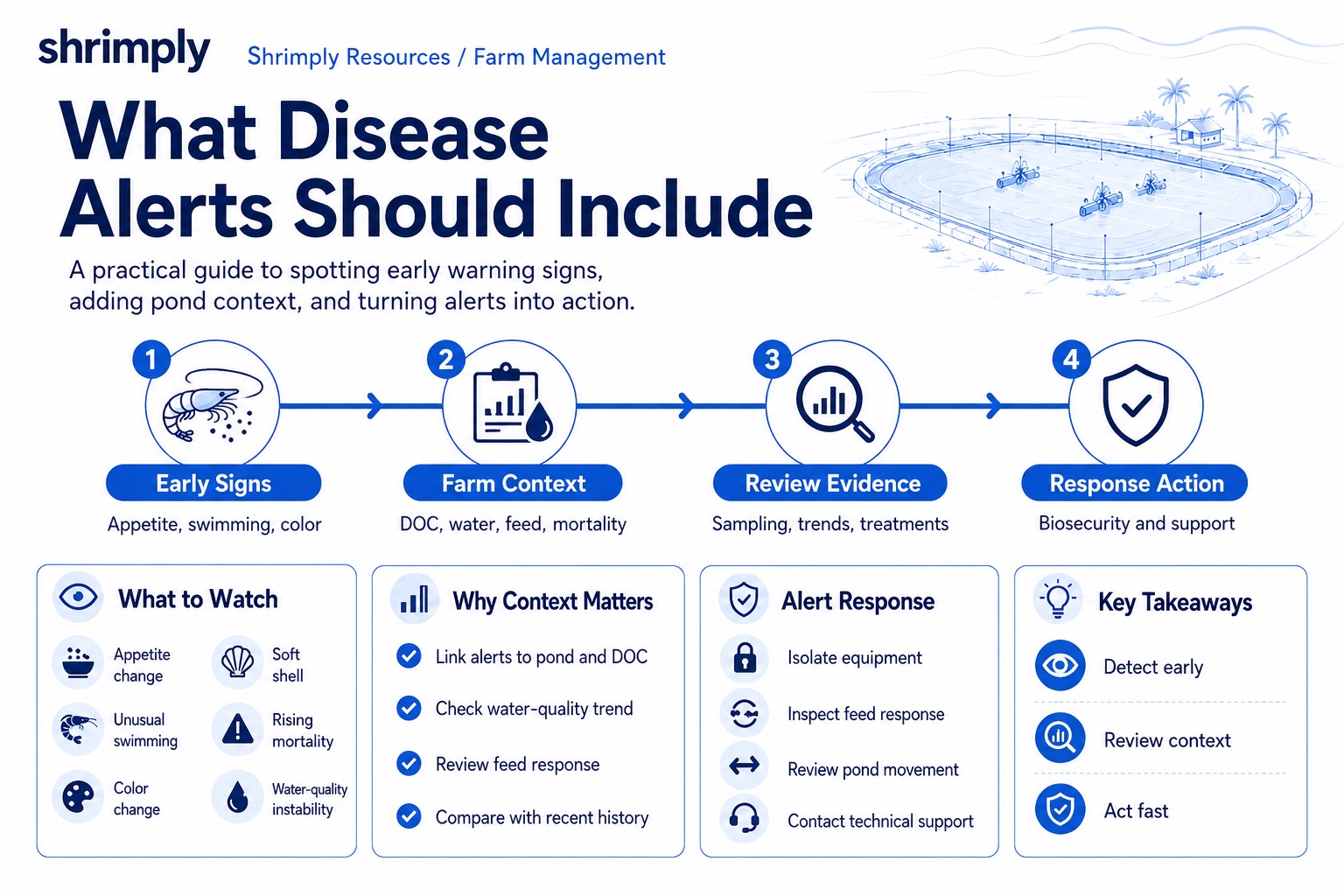
A disease alert should not wait for a single dramatic event. Shrimp farms should watch appetite changes, unusual swimming, color change, soft shell, rising mortality, water-quality instability, and nearby outbreak information.
WorldFish disease-risk material emphasizes better detection, management, and prevention. FAO vannamei material also describes disease signs and prevention measures for major shrimp disease risks.
Why alerts need farm context
A mortality number means more when it is connected to pond, DOC, water quality, recent feed response, sampling history, and treatments. Without context, teams may underreact to a serious pattern or overreact to a normal operational event.
Digital alerts are most useful when they make the team review evidence quickly, not when they pretend to diagnose disease automatically.
Biosecurity is part of the alert system
Disease alerts should connect to action: isolate equipment, check water exchange, review movement between ponds, inspect feed response, and contact the right technical support. Good alert design turns observations into a repeatable response routine.
What to apply on the farm
- Track appetite, mortality, behavior, and water quality by pond.
- Define alert thresholds and review rules before the cycle starts.
- Record actions taken after each alert.
- Keep biosecurity steps tied to the alert workflow.
What are the early signs of disease in shrimp?
Watch for appetite changes, unusual swimming, colour change, soft shell, rising mortality, water-quality instability, and unusual feed-tray observations. These signals do not confirm a disease by themselves, but they warrant a rapid pond review and appropriate diagnostic support.
How can shrimp farmers prevent disease outbreaks?
Prevention combines biosecurity, quality post-larvae, controlled water and equipment movement, consistent water-quality and appetite records, early mortality review, and diagnostic escalation. A farm should follow local regulations and veterinary guidance for any treatment decisions.
Aquaculture engineers and vannamei shrimp farm practitioners dedicated to precision pond data, evidence-based water quality management, and biological yield optimization.
Ph.D. in Aquaculture Engineering, 18+ years tropical penaeid farm advisory and biosecurity audit experience
Shrimp farming resources library
Browse more Shrimply guides for feed, water quality, growth, disease, harvest, and finance workflows.
Vannamei Water Quality Parameters: Target Ranges & Warning Signs
Practical water quality reference for Pacific white shrimp (Litopenaeus vannamei), with contextual ranges for dissolved oxygen, temperature, pH, salinity, alkalinity, ammonia, nitrite, and nitrate.
Shrimp Pond Water Colour: Algae Types, Risks and Solutions
Learn what green, brown, blue-green, red, clear, or dark shrimp-pond water may indicate and how to monitor and manage algae safely.