Why feed inventory is operational, not just accounting
Feed is often one of the largest variable costs in shrimp production. If the farm does not know what feed is in stock, what was issued, and which pond used it, managers cannot trust FCR or cost reports.
FAO guidance on feed records emphasizes identifying feeds and keeping records of arrival and use. For shrimp farms, this protects both production decisions and financial reporting.
What to track
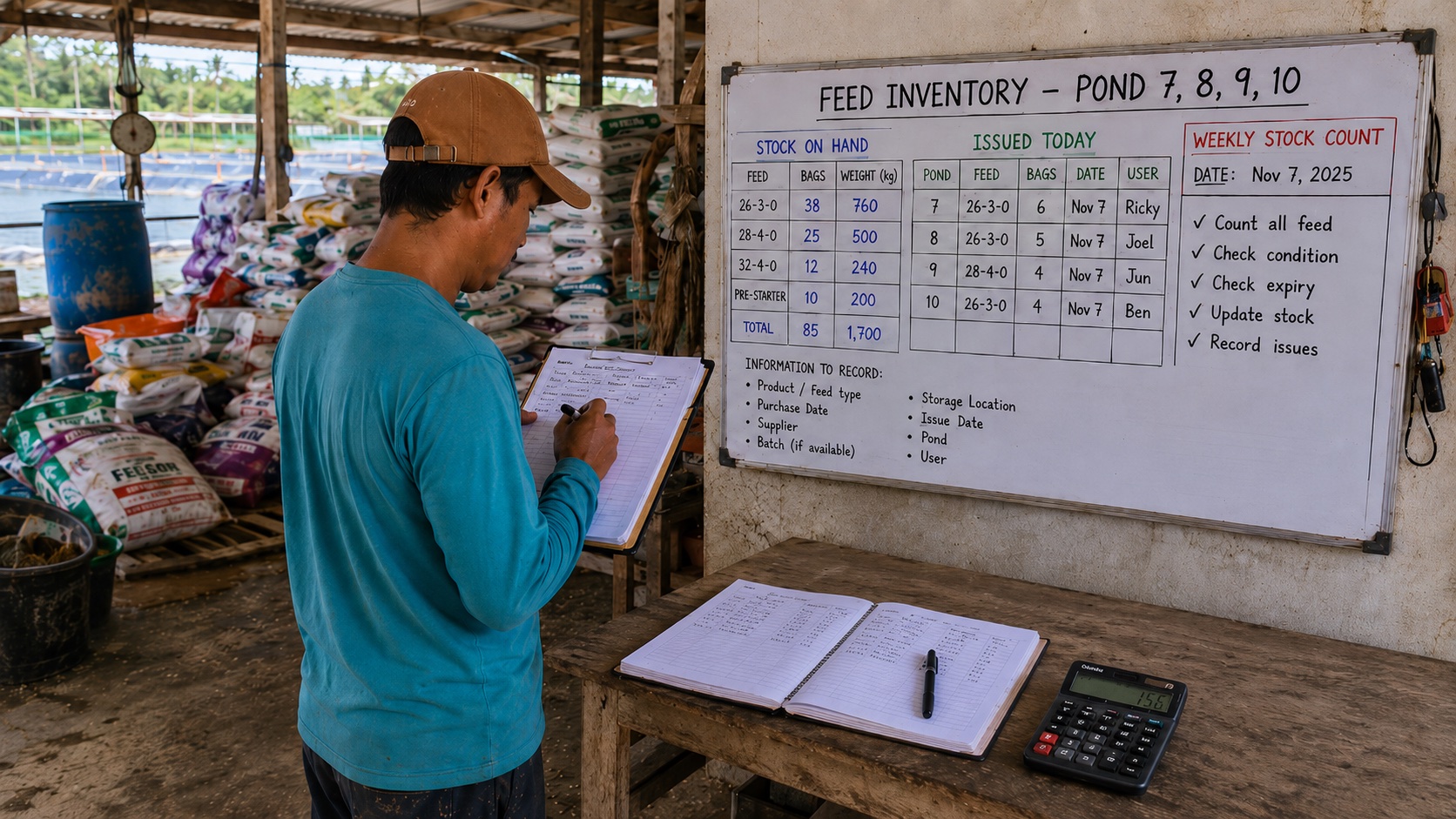
At minimum, farms should track feed product, bag count or weight, purchase date, supplier, batch if available, storage location, issue date, pond, and user. A weekly stock count helps catch missing movement before the farm discovers the problem at feeding time.
Storage conditions matter too. Feed exposed to moisture, heat, pests, or poor rotation can damage performance even if the feeding schedule looks correct.
How inventory supports better feeding
Inventory records help managers compare planned feed use against actual feed issued. When paired with sampling and harvest data, this shows whether feed strategy is supporting growth or creating waste.
What to apply on the farm
- Record feed arrivals, products, quantities, and suppliers.
- Deduct stock only when feed is actually used or issued.
- Connect feed use to pond and cycle records.
- Review reorder timing before high-consumption weeks.
What is feed inventory control for shrimp farms?
Feed is often one of the largest variable costs in shrimp production. If the farm does not know what feed is in stock, what was issued, and which pond used it, managers cannot trust FCR or cost reports. Feed inventory is both a cost-control and production-control system.
Why does feed inventory matter for shrimp farmers?
Feed inventory is both a cost-control and production-control system. Stockouts can disrupt feeding rhythm, while overstocking can create storage and quality risk. Batch and movement records help farms explain poor feed response.
What should farmers review when managing feed inventory?
Record feed arrivals, products, quantities, and suppliers. Deduct stock only when feed is actually used or issued. Connect feed use to pond and cycle records. Review reorder timing before high-consumption weeks.
Aquaculture engineers and vannamei shrimp farm practitioners dedicated to precision pond data, evidence-based water quality management, and biological yield optimization.
M.Sc. in Aquatic Animal Nutrition, 14+ years commercial vannamei feed formulation and feeding rate optimization
Shrimp feed management software
Explore how shrimp feed management software connects with this farm guide in Shrimply.
Improving FCR in Shrimp Farming: How to Use Feed Conversion Ratio Correctly
Understand shrimp feed conversion ratio, why FCR matters, what can distort it, and how farms can improve FCR with better feed, biomass, mortality, and harvest records.
Shrimp Feed Index: How to Calculate Daily Feed Without Guessing
Learn how the shrimp feed index method estimates daily feed from DOC, population, and target ADG—and how to adjust it using real pond data.
Shrimp farming resources library
Browse more practical Shrimply guides for vannamei farm operations and management.