What feed trays are trying to tell you
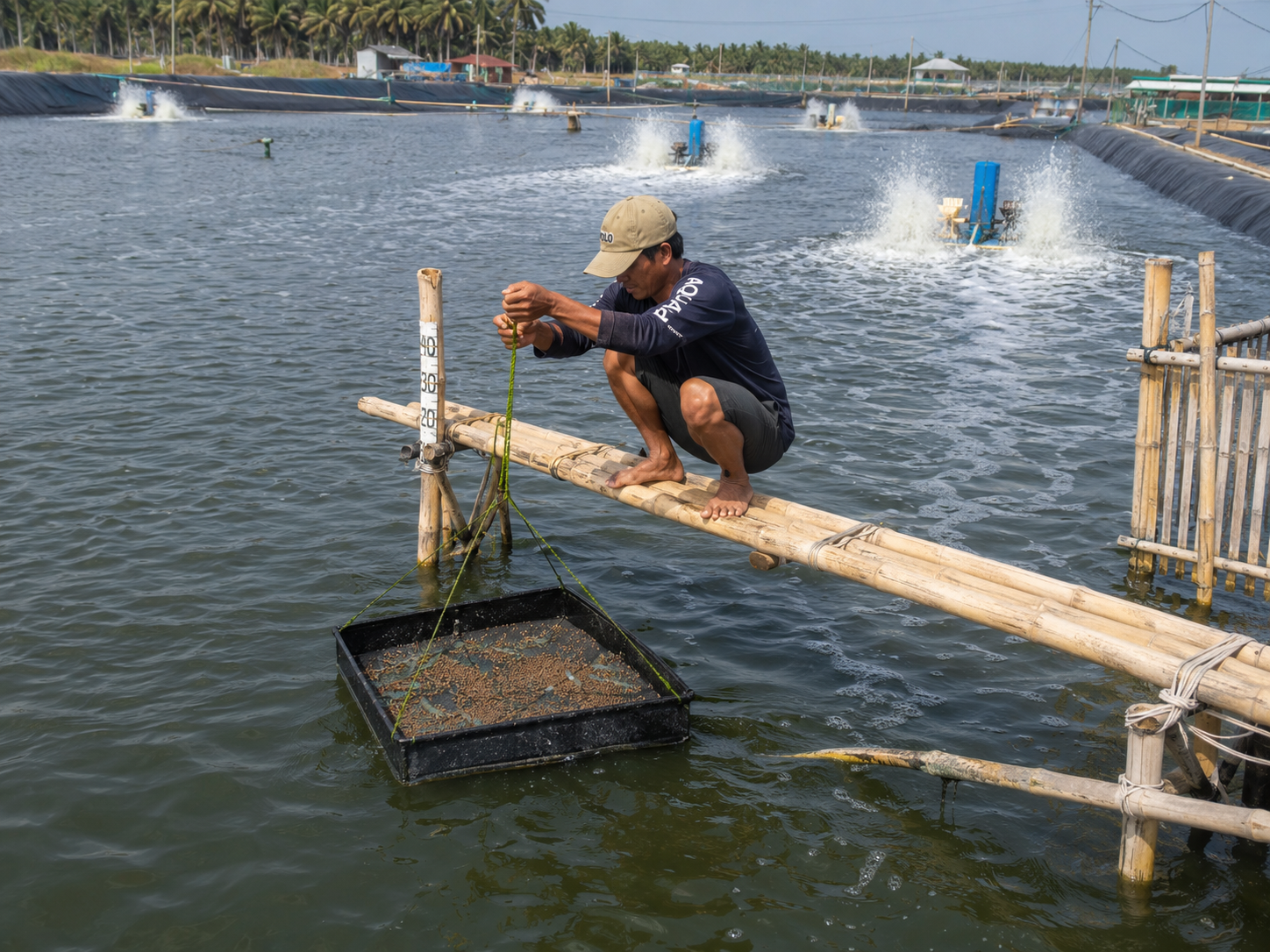
Feed trays are simple tools for checking whether shrimp are consuming feed as expected. They are not perfect biomass calculators, but they give technicians a direct appetite signal that can guide feeding adjustments.
FAO aquaculture methods describe feeding trays as tools used to supply feed and monitor feed consumption and growth. In shrimp farms, that observation is valuable because uneaten feed can quickly become a water-quality and cost problem.
How to interpret tray results
A clean tray may suggest strong appetite, but the farm should still compare it with growth and water quality. A tray with leftover feed may indicate overfeeding, low appetite, stress, poor DO, disease risk, molting, or weather-related behavior.
The best practice is to track tray observations consistently by pond and time, then review them alongside feed amount, DO, pH, temperature, and mortality.
Avoid overreacting to one tray
One tray result should not drive the whole feeding strategy. Look for patterns across multiple trays, recent water-quality movement, and recent sampling. This protects the farm from cutting feed too aggressively or continuing waste for too long.
To establish your pond's target baseline ration before reading check trays, consult our practical Vannamei Feeding Rate Chart & Calculator, which calculates biomass-based quotas by average body weight.
What to apply on the farm
- Record tray checks at consistent times.
- Average multiple tray observations before judging appetite.
- Compare leftover feed with DO, pH, temperature, and mortality.
- Use tray patterns to adjust feeding gradually.
How much should I feed shrimp each day?
Use the farm feeding plan as a starting point, then adjust gradually using estimated biomass, shrimp size, feed-tray observations, recent sampling, water quality, weather, and mortality. Do not increase feed from appetite alone without checking whether growth and pond conditions support it.
What does leftover feed in a shrimp feed tray mean?
Leftover feed can indicate overfeeding or reduced appetite from low oxygen, water-quality stress, molting, disease risk, or weather. Confirm the pattern across trays and recent pond records before making a major feeding change.
Aquaculture engineers and vannamei shrimp farm practitioners dedicated to precision pond data, evidence-based water quality management, and biological yield optimization.
M.Sc. in Aquatic Animal Nutrition, 14+ years commercial vannamei feed formulation and feeding rate optimization
Shrimp feed management software
Explore how shrimp feed management software connects with this farm guide in Shrimply.
Improving FCR in Shrimp Farming: How to Use Feed Conversion Ratio Correctly
Understand shrimp feed conversion ratio, why FCR matters, what can distort it, and how farms can improve FCR with better feed, biomass, mortality, and harvest records.
Shrimp Feed Index: How to Calculate Daily Feed Without Guessing
Learn how the shrimp feed index method estimates daily feed from DOC, population, and target ADG—and how to adjust it using real pond data.
Shrimp farming resources library
Browse more practical Shrimply guides for vannamei farm operations and management.