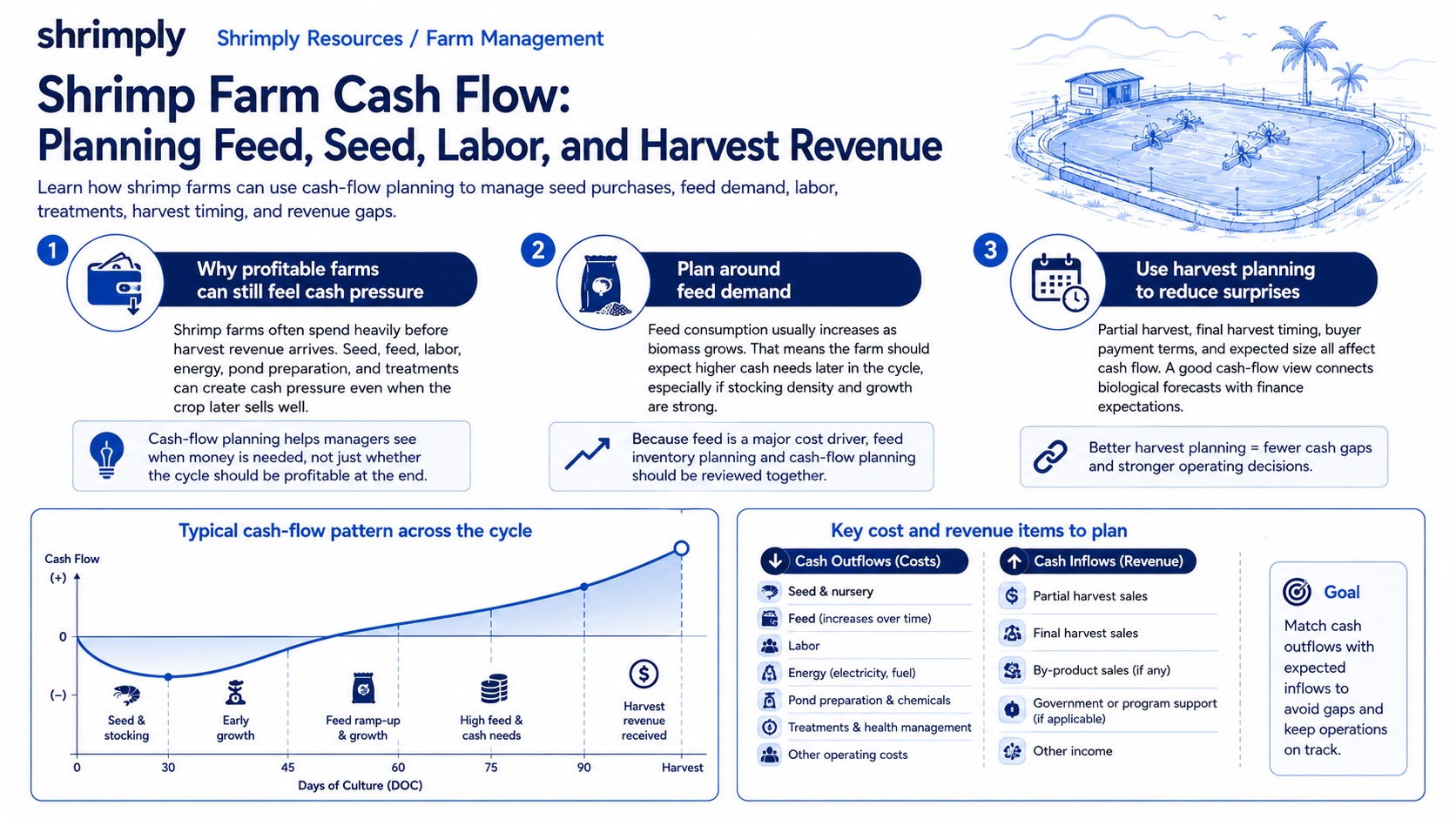
Why profitable farms can still feel cash pressure
Shrimp farms often spend heavily before harvest revenue arrives. Seed, feed, labor, energy, pond preparation, and treatments can create cash pressure even when the crop later sells well.
Cash-flow planning helps managers see when money is needed, not just whether the cycle should be profitable at the end.
Plan around feed demand
Feed consumption usually increases as biomass grows. That means the farm should expect higher cash needs later in the cycle, especially if stocking density and growth are strong.
Because feed is a major cost driver, feed inventory planning and cash-flow planning should be reviewed together.
Use harvest planning to reduce surprises
Partial harvest, final harvest timing, buyer payment terms, and expected size all affect cash flow. A good cash-flow view connects biological forecasts with finance expectations.
What to apply on the farm
- Estimate seed, feed, labor, energy, and treatment costs before stocking.
- Update feed cash needs as biomass changes.
- Track expected harvest revenue and payment timing.
- Review cash flow weekly during high-feed periods.
What is shrimp farm cash flow?
Shrimp farms often spend heavily before harvest revenue arrives. Seed, feed, labor, energy, pond preparation, and treatments can create cash pressure even when the crop later sells well. Cash flow is about timing, not only total profit.
Why does cash flow matter for shrimp farmers?
Cash flow is about timing, not only total profit. Feed demand often rises before harvest revenue arrives. Cycle planning should include expected expenses and revenue timing.
What should farmers review when managing cash flow?
Estimate seed, feed, labor, energy, and treatment costs before stocking. Update feed cash needs as biomass changes. Track expected harvest revenue and payment timing. Review cash flow weekly during high-feed periods.
Aquaculture engineers and vannamei shrimp farm practitioners dedicated to precision pond data, evidence-based water quality management, and biological yield optimization.
M.M. in Agribusiness, 15+ years commercial shrimp farm production planning, cycle cost modeling, and harvest operations
Shrimp farming resources library
Browse more Shrimply guides for feed, water quality, growth, disease, harvest, and finance workflows.
Shrimp Harvest Tracking: What to Record Before, During, and After Harvest
When should shrimp farmers harvest or partially harvest? Learn which pond, size, biomass, buyer, price, and cycle records support a well-documented harvest decision.
Shrimp Farm COGS: Understanding the True Cost of a Crop Cycle
Is your shrimp crop profitable? Learn how to calculate shrimp farm cost of goods sold using feed, seed, labor, energy, treatments, harvest costs, and kilograms sold.