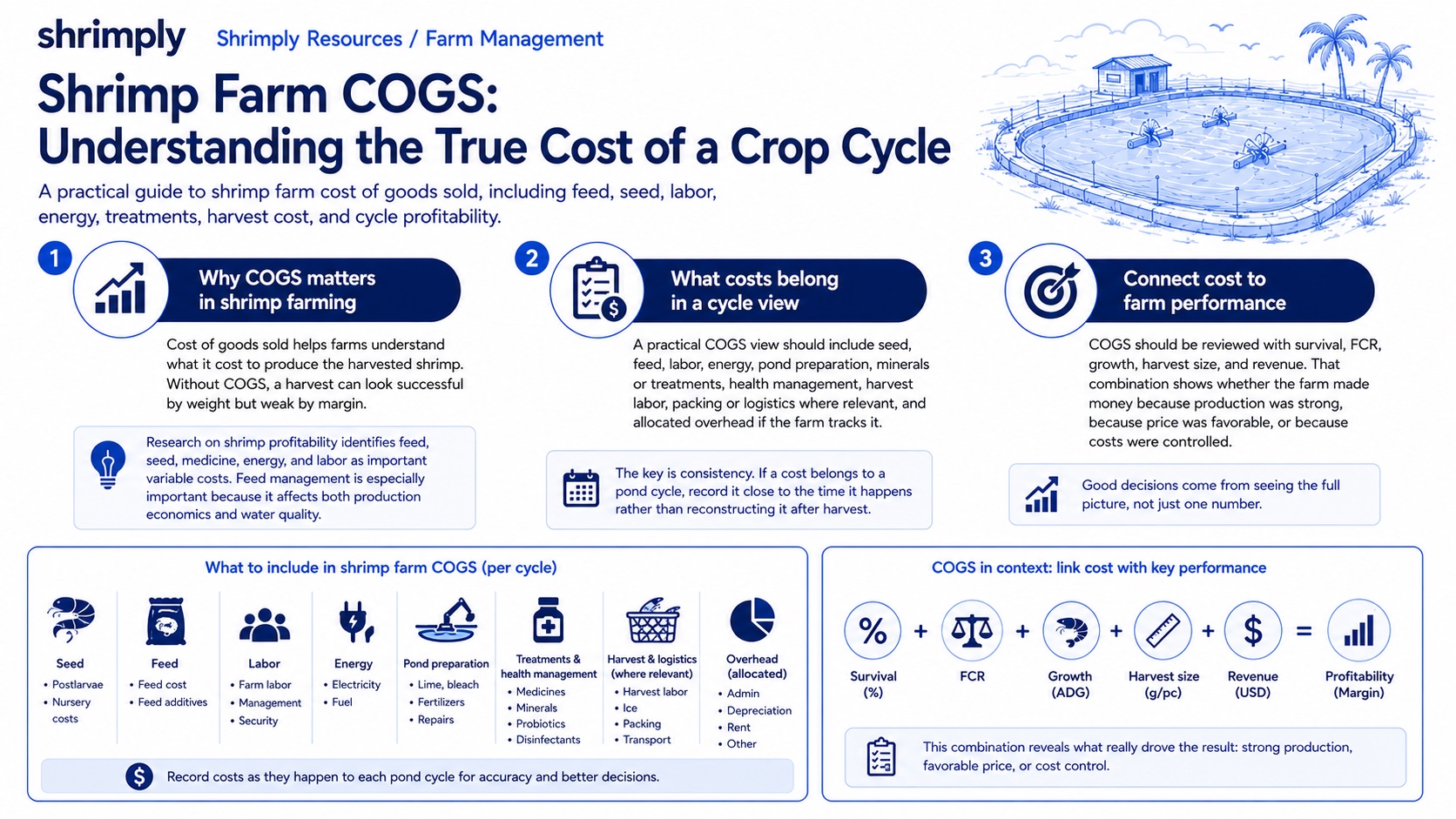
Why COGS matters in shrimp farming
Cost of goods sold helps farms understand what it cost to produce the harvested shrimp. Without COGS, a harvest can look successful by weight but weak by margin.
Research on shrimp profitability identifies feed, seed, medicine, energy, and labor as important variable costs. Feed management is especially important because it affects both production economics and water quality.
What costs belong in a cycle view
A practical COGS view should include seed, feed, labor, energy, pond preparation, minerals or treatments, health management, harvest labor, packing or logistics where relevant, and allocated overhead if the farm tracks it.
The key is consistency. If a cost belongs to a pond cycle, record it close to the time it happens rather than reconstructing it after harvest.
Connect cost to farm performance
COGS should be reviewed with survival, FCR, growth, harvest size, and revenue. That combination shows whether the farm made money because production was strong, because price was favorable, or because costs were controlled.
What to apply on the farm
- Track feed, seed, labor, energy, treatments, and harvest costs by cycle.
- Connect cost records to pond and harvest records.
- Review COGS per kilogram after each cycle.
- Compare cost movement with FCR and survival.
How do I calculate shrimp farm profitability?
Start with complete cycle revenue, then compare it with feed, seed, labour, energy, treatments, harvest, logistics where relevant, and allocated overhead where the farm tracks it. Review the result alongside survival, FCR, growth, harvest size, and sale price.
What costs should be included in shrimp farm COGS?
A practical cycle view includes seed, feed, labour, energy, pond preparation, minerals or treatments, health management, harvest labour, packing or logistics where relevant, and consistently allocated overhead. Record costs as they occur rather than reconstructing them after harvest.
Aquaculture engineers and vannamei shrimp farm practitioners dedicated to precision pond data, evidence-based water quality management, and biological yield optimization.
M.M. in Agribusiness, 15+ years commercial shrimp farm production planning, cycle cost modeling, and harvest operations
Shrimp farming resources library
Browse more Shrimply guides for feed, water quality, growth, disease, harvest, and finance workflows.
Shrimp Harvest Tracking: What to Record Before, During, and After Harvest
When should shrimp farmers harvest or partially harvest? Learn which pond, size, biomass, buyer, price, and cycle records support a well-documented harvest decision.
Shrimp Farm Cash Flow: Planning Feed, Seed, Labor, and Harvest Revenue
Learn how shrimp farms can use cash-flow planning to manage seed purchases, feed demand, labor, treatments, harvest timing, and revenue gaps.