What harvest tracking should capture
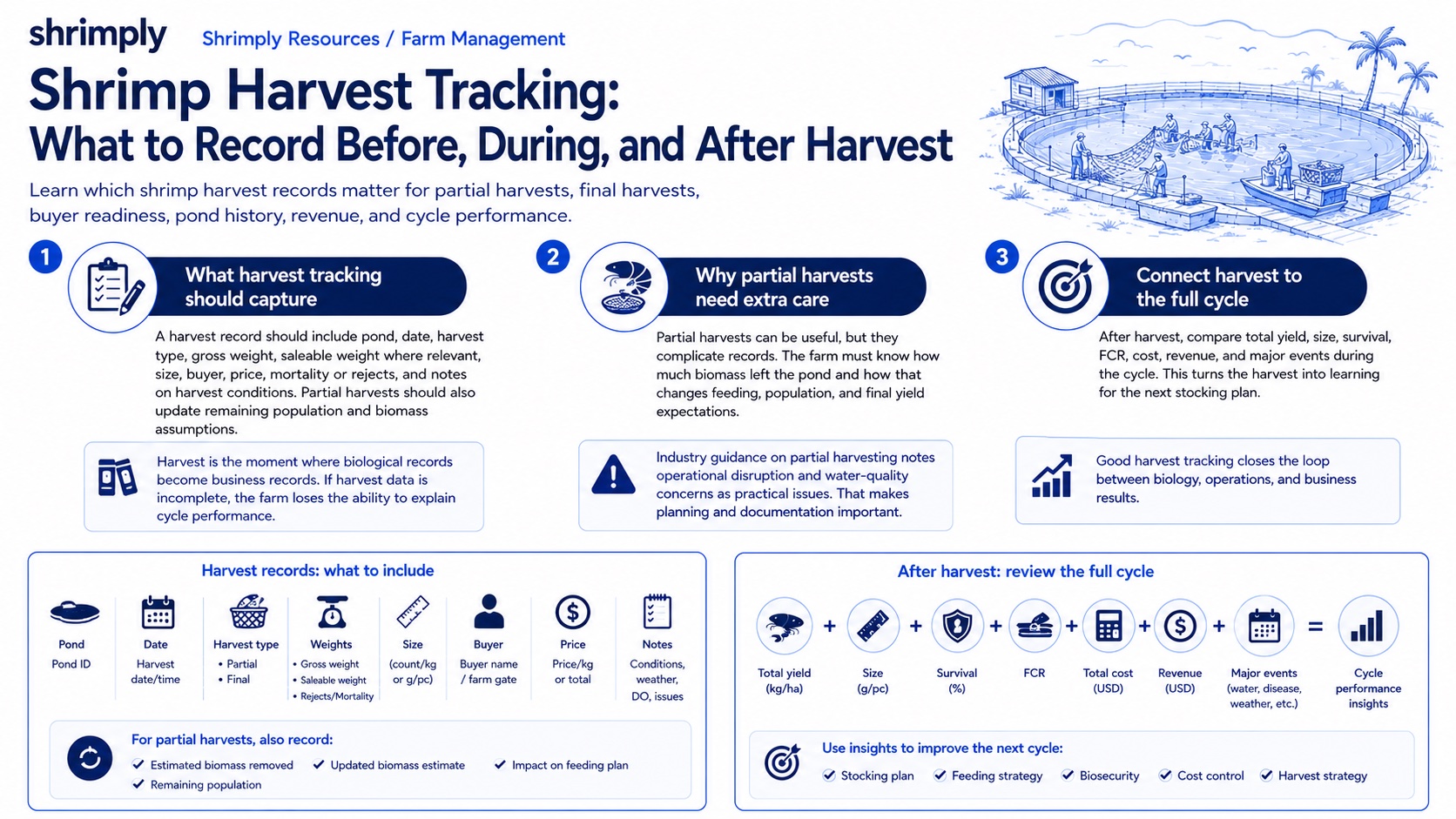
A harvest record should include pond, date, harvest type, gross weight, saleable weight where relevant, size, buyer, price, mortality or rejects, and notes on harvest conditions. Partial harvests should also update remaining population and biomass assumptions.
Harvest is the moment where biological records become business records. If harvest data is incomplete, the farm loses the ability to explain cycle performance.
Why partial harvests need extra care
Partial harvests can be useful, but they complicate records. The farm must know how much biomass left the pond and how that changes feeding, population, and final yield expectations.
Industry guidance on partial harvesting notes operational disruption and water-quality concerns as practical issues. That makes planning and documentation important.
Connect harvest to the full cycle
After harvest, compare total yield, size, survival, FCR, cost, revenue, and major events during the cycle. This turns the harvest into learning for the next stocking plan.
What to apply on the farm
- Record partial and final harvests separately.
- Capture weight, size, buyer, price, and harvest notes.
- Update remaining biomass after partial harvest.
- Review final yield against feed, sampling, and mortality records.
When should I harvest shrimp?
Harvest timing should be based on the farm's target size, current growth and survival, estimated biomass, feed demand, pond risk, buyer specifications, price, and operational readiness. It is a farm decision, not a fixed DOC rule.
What should I record for a partial shrimp harvest?
Record the pond, date, harvest type, weight, size, buyer, price, rejects or mortality where relevant, and harvest conditions. Then update remaining biomass and the feeding plan so the cycle records remain accurate.
Aquaculture engineers and vannamei shrimp farm practitioners dedicated to precision pond data, evidence-based water quality management, and biological yield optimization.
M.M. in Agribusiness, 15+ years commercial shrimp farm production planning, cycle cost modeling, and harvest operations
Shrimp farming resources library
Browse more Shrimply guides for feed, water quality, growth, disease, harvest, and finance workflows.
Shrimp Farm COGS: Understanding the True Cost of a Crop Cycle
Is your shrimp crop profitable? Learn how to calculate shrimp farm cost of goods sold using feed, seed, labor, energy, treatments, harvest costs, and kilograms sold.
Shrimp Farm Cash Flow: Planning Feed, Seed, Labor, and Harvest Revenue
Learn how shrimp farms can use cash-flow planning to manage seed purchases, feed demand, labor, treatments, harvest timing, and revenue gaps.